Stith Thompson, a Distinguished Professor of English and Folklore at Indiana University, anthologized these Native American tales from the ethnographic literature. His chief contribution to the field was his ‘Motif-Index of Folk Literature’, which is a cross-cultural index of themes that occur in folktales.
Reading through the traditional folk stories of Africa, Europe, and Native America, it becomes obvious that there are a broad set of motifs that are appear across geographic boundaries. Is this evidence of diffusion or something buried deeper in our cultural matrix that goes back to our common origins? This is still a mystery. READ MORE
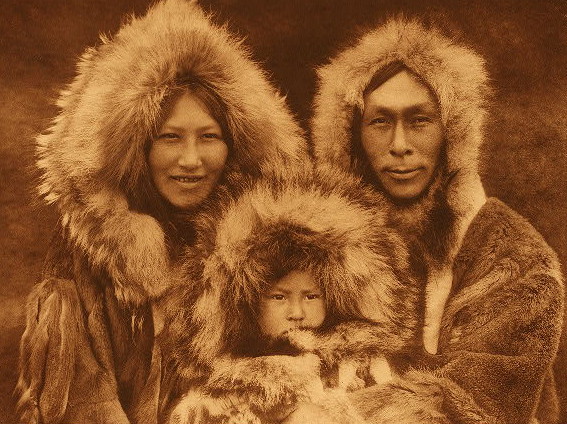
The North American Indian by Edward S. Curtis is one of the most significant and controversial representations of traditional American Indian culture ever produced. Issued in a limited edition from 1907-1930, the publication continues to exert a major influence on the image of Indians in popular culture. Curtis said he wanted to document “the old time Indian, his dress, his ceremonies, his life and manners.” In over 2000 photogravure plates and narrative, Curtis portrayed the traditional customs and lifeways of eighty Indian tribes. The twenty volumes, each with an accompanying portfolio, are organized by tribes and culture areas encompassing the Great Plains, Great Basin, Plateau Region, Southwest, California, Pacific Northwest, and Alaska. Featured here are all of the published photogravure images including over 1500 illustrations bound in the text volumes, along with over 700 portfolio plates.

- Pacific Northwest
- Achomawi Indians
- Chemakum Indians
- Chukchansi Indians
- Clayoquot Indians
- Coast Salish Indians
- Cowichan Indians
- Haida Indians
- Hupa Indians
- Hesquiat Indians
- Karok Indians
- Klamath Indians
- Koskimo Indians
- Kwakiutl Indians
- Lummi Indians
- Makah Indians
- Nootka Indians
- Puget Sound Salish Indians
- Quileute Indians
- Quinault Indians
- Shasta Indians
- Skokomish Indians
- Tolowa Indians
- Tututni Indians
- Willapa Indians
- Wiyot Indians
- Yurok Indians

- New Southwest
- Acoma Indians
- Apache Indians
- Cochiti Indians
- Havasupai Indians
- Hopi Indians
- Hualapai Indians
- Isleta Indians
- Jemez Indians
- Jicarilla Indians
- Keresan Indians
- Laguna Indians
- Maricopa Indians
- Mohave Indians
- Navajo Indians
- Pima Indians
- Qahatika Indians
- Taos Indians
- Tewa Indians
- Tigua Indians
- Tohono O’Odham Indians
- Yuma Indians
- White Mountain Apache Indian Tribe
- Yavapai Indians
- Zuñi Indians

- Great Basin
- Cahuilla Indians
- Chemehuevi Indians
- Comanche Indians
- Cupeño Indians
- Diegueño Indians
- Mono Indians
- Northern Paiute Indians
- Shoshonean Indians
- Washo Indians

- Great Plains
- Arapaho Indians
- Arikara Indians
- Assiniboine Indians
- Atsina Indians
- Brule Indians
- Cheyenne Indians
- Chipewyan Indians
- Cree Indians
- Crow Indians
- Dakota Indians
- Hidatsa Indians
- Kainah Indians
- Mandan Indians
- Oglala Indians
- Osage Indians
- Oto Indians
- Piegan Indians
- Ponca Indians
- Quapaw Indians
- Sarsi Indians
- Siksika Indians
- Teton Indians
- Wichita Indians
- Yanktonai Indians

- Plateau Region
- Cayuse Indians
- Chinookan Indians
- Kalispel Indians
- Klikitat Indians
- Kutenai Indians
- Nespelim Indians
- Nez Perce Indians
- Salish Indians
- Salishan Indians
- Spokane Indians
- Tlakluit Indians
- Umatilla Indians
- Walla Walla Indians
- Yakama Indians


 Alessandro Colao
Leave a comment