Trabocchi (singular trabocco or trabucco) are traditional wooden fishing machines built on stilts and rock ledges over the Adriatic Sea, most famously concentrated along the Costa dei Trabocchi in Abruzzo (especially the province of Chieti) as well as parts of Molise (including near Termoli) and Puglia.
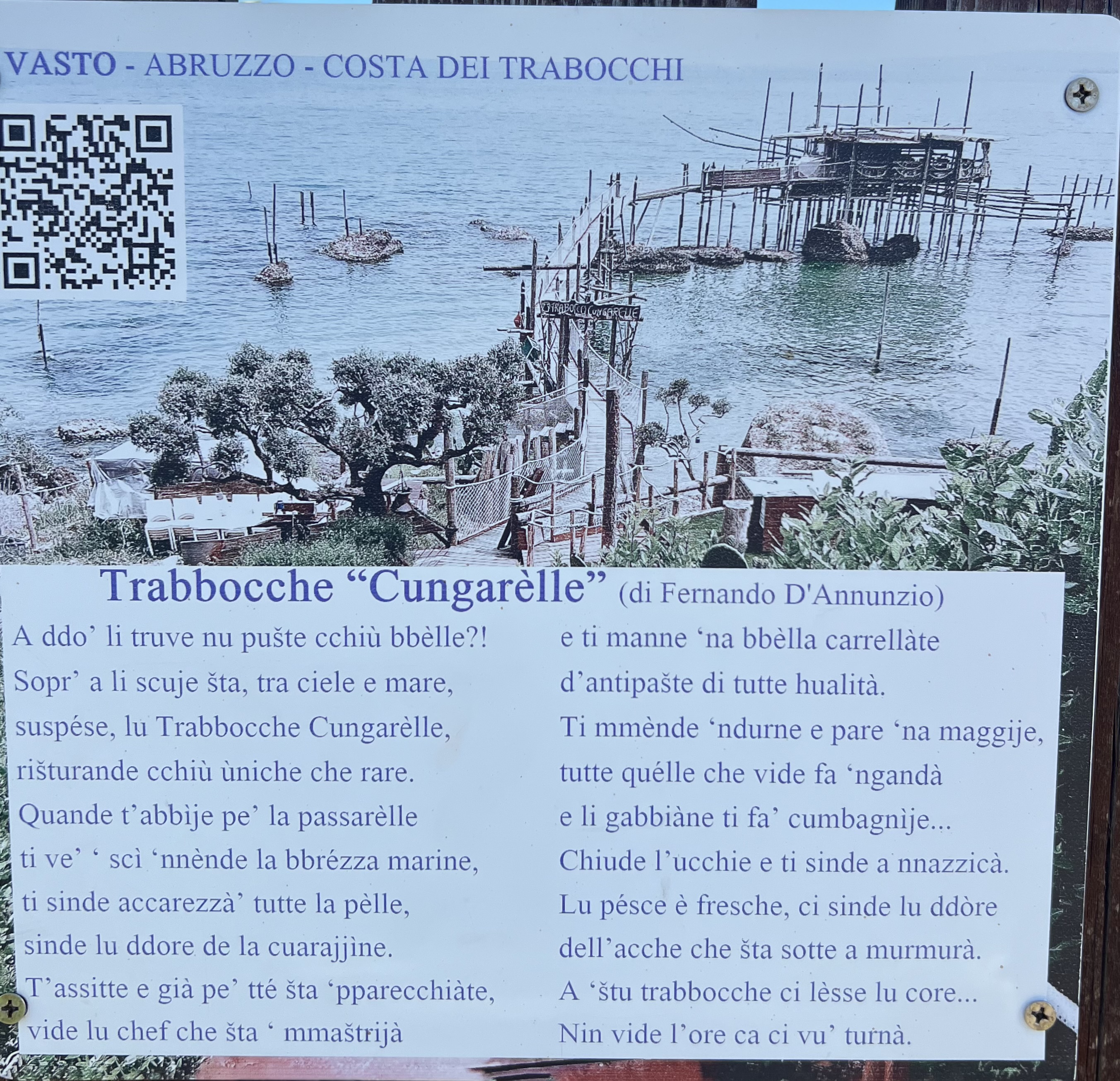
How They Work & History – Engineering & Design: A trabocco consists of a timber platform (traditionally built with resilient Aleppo pine) anchored to coastal rocks or pilings and linked to shore by a narrow wooden gangway. Long extending arms called antenne hold a wide net (trabocchetto) lowered into the sea and hauled back up using ropes, pulleys, and wooden winches. Over time, iron railway rails and steel cables reinforced or replaced older timber supports. Origins & Purpose: Built originally by coastal farmers and fishermen so they could fish safely without going out in boats during rough seas, trabocchi have roots traced by some accounts to ancient seafarers and appear in historical references dating back centuries (including early mentions linked to the Abruzzo coast). Poet Gabriele d’Annunzio famously compared their spidery silhouette to a prehistoric creature suspended over the water. Preservation & Modern Use: As industrial fishing expanded after World War II, traditional trabocco fishing declined. Regional conservation rules protect surviving structures and restrict new construction, while many trabocchi have been restored as atmospheric seafood restaurants or cultural/visiting landmarks—sometimes continuing limited or seasonal fishing traditions alongside hospitality.
Most trabocco restaurants operate with fixed-price tasting menus centered on fresh Adriatic seafood, pasta (spaghettoni allo scoglio, chitarra), mussels, and local fish, typically costing around €50 to €90 per persondepending on the venue and inclusions. Advance reservations are strongly recommended, and many venues have limited seating or seasonal schedules


Leave a Reply