Cilento, Vallo di Diano and Alburni National Park
Cilento (often referring to Cilento e Vallo di Diano National Park in southwest Italy, sometimes including nearby areas) is packed with beaches, ancient sites, hill towns, and great hikes. The Cilento, Vallo di Diano and Alburni National Park is a vast protected area in the Campania region of southern Italy. Encompassing coastal, mountain, and rural landscapes, it is renowned for its biodiversity, ancient settlements, and cultural continuity dating back to Magna Graecia. Here are the main things to see, grouped by area:
Coastal highlights (Cilento coast)
• Paestum (UNESCO) – one of the best-preserved Greek temples in the world (near the town of Paestum/Capaccio).
• Velia / Elea (UNESCO) – impressive Greek-Roman ruins with scenic views.
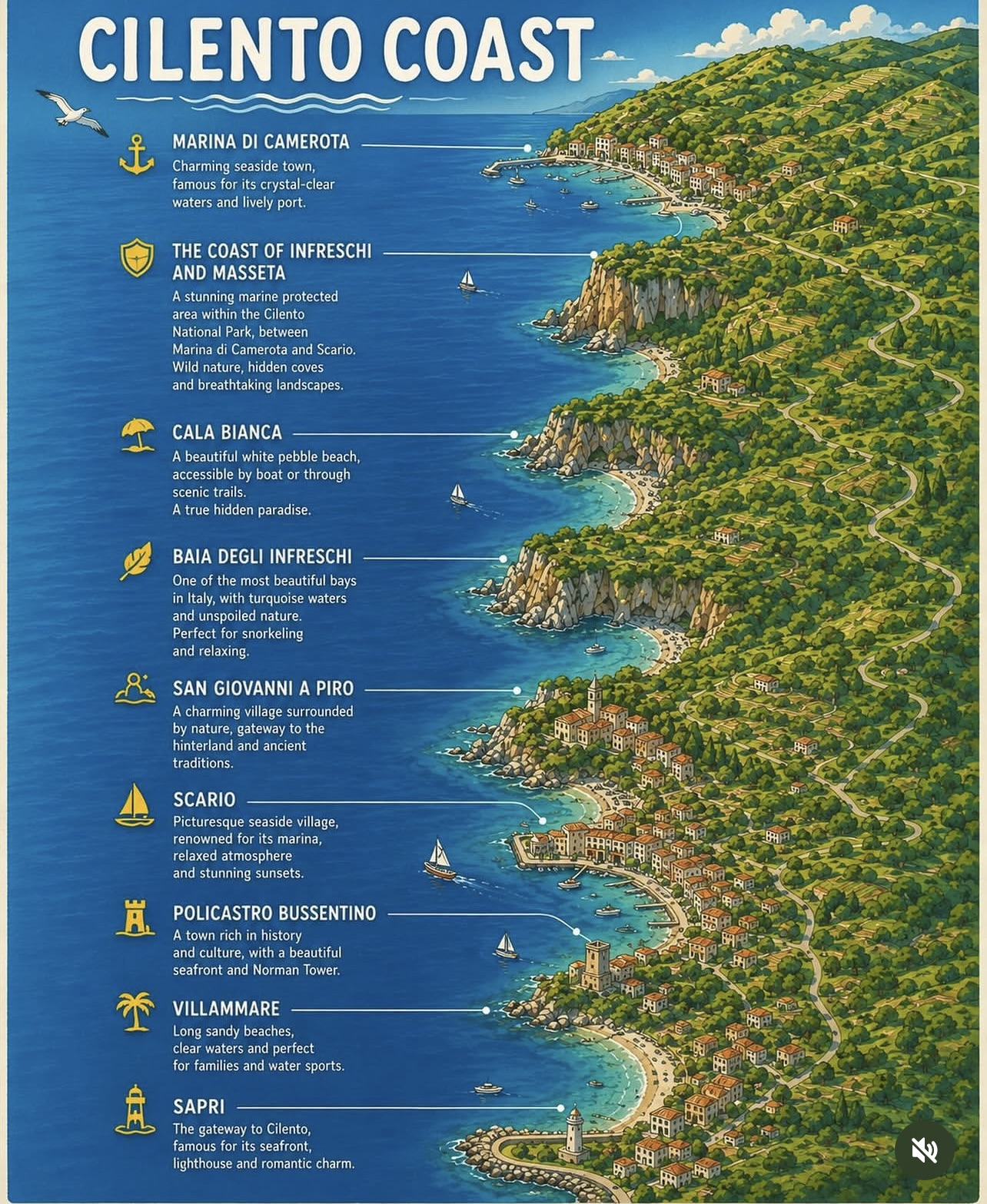
• Marina di Camerota – lively coastal base for exploring nearby coves.
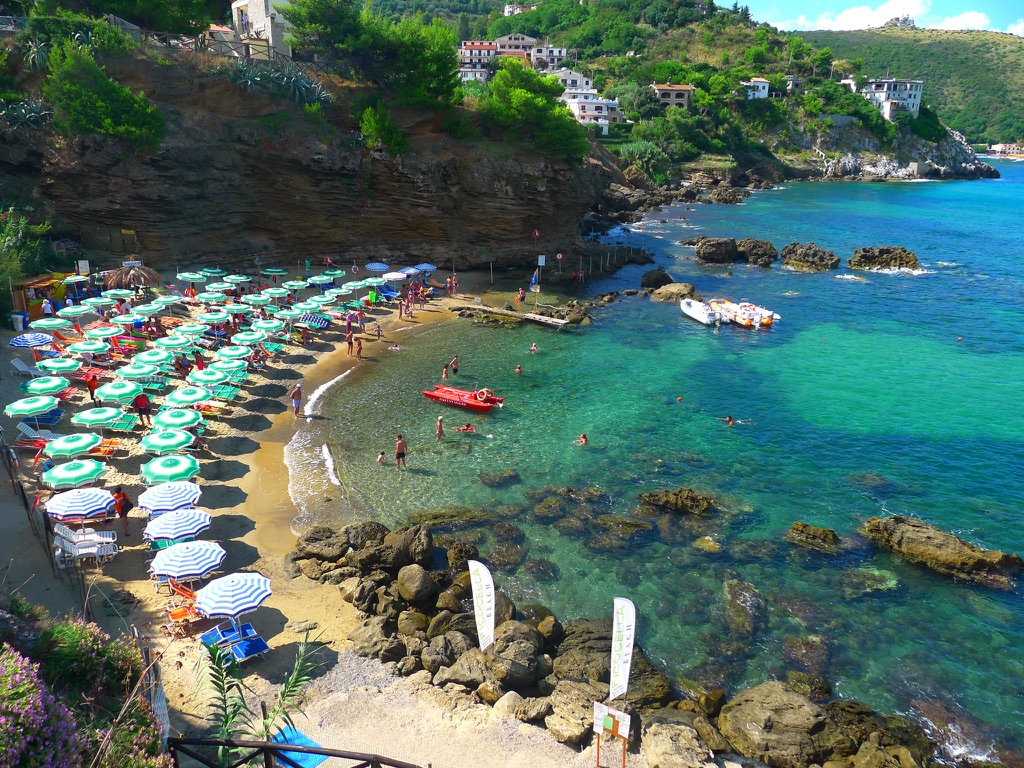
• Cala Bianca (Marina di Camerota) – a standout beach with turquoise water.
• Policastro Bussentino / Scario / San Giovanni a Piro area – quieter stretches of coast and sea viewpoints.
• Acciaroli – a classic “old-school” seaside town, often used as a base for boat trips.
• Ascea Marina – beaches plus the archaeological area of Elea/Ascea depending on where you base.
• San Marco di Castellabate & Castellabate – pretty medieval setting + access to coves along the coast.
Inland and “hill town” atmosphere
• Vallo della Lucania – good for markets and as a gateway town.
• Teggiano – historic center; great if you want less beach and more medieval character.
• Perdifumo, Castelnuovo Cilento, Montecorice – charming villages and viewpoints.
• Astelamo / Certosa di Padula area (nearby) – the famous Certosa di San Lorenzo (Padula Charterhouse) is a major “wow” site.
Nature & beaches
• Cilento National Park viewpoints and trails – you’ll find many hikes from easy to challenging.
• Caves and coastal geology (depending on season/conditions) – some areas have boat-access coves and grottos.
• Swim spots in coves like Cala del Cefalo (near San Nicola / Marina di Camerota area) and other smaller beaches around the coast.
Boat trips (highly recommended)
If you’re on the coast, consider a boat tour for: Hidden coves and beach caves – Stops at multiple beaches in a day – Sea views of cliffs and promontories
Best “first picks” if you have limited time
1. Paestum (Greek temples)
2. Velia / Elea
3. Marina di Camerota + Cala Bianca (or similar nearby beaches)
4. Castellabate / San Marco
5. Certosa di Padula (if you can do inland)
Geography and Landscape
The park stretches from the Tyrrhenian Sea’s Cilento coast to the limestone ranges of the Alburni Mountains and the inland plateau of the Vallo di Diano. Its terrain includes rugged peaks such as Mount Cervati (1,898 m), karst caves, and river valleys like the Calore and Tanagro. This topographic variety supports rich ecosystems and extensive forest cover.
Biodiversity and Environment
Cilento is notable for Mediterranean vegetation interspersed with alpine flora, chestnut and beech forests, and endemic species. The coastal areas host olive groves and maquis shrubland, while wildlife includes wolves, wildcats, and rare raptors. The park’s varied habitats make it one of southern Italy’s key ecological reserves.
Cultural Heritage
Within its boundaries lie major archaeological and historical sites: the ancient Greek colonies of Paestum and Velia, and the monastic complex Certosa di Padula. Villages preserve medieval architecture and local traditions tied to agriculture, olive oil, and cheesemaking. The region embodies the Mediterranean cultural landscape celebrated by UNESCO.
Conservation and Tourism
The park promotes sustainable tourism through hiking trails such as the Path of the Gods and coastal routes linking fishing hamlets. It contributes to preserving both natural systems and intangible heritage, serving as a model of coexistence between human settlement and environmental protection in southern Italy.