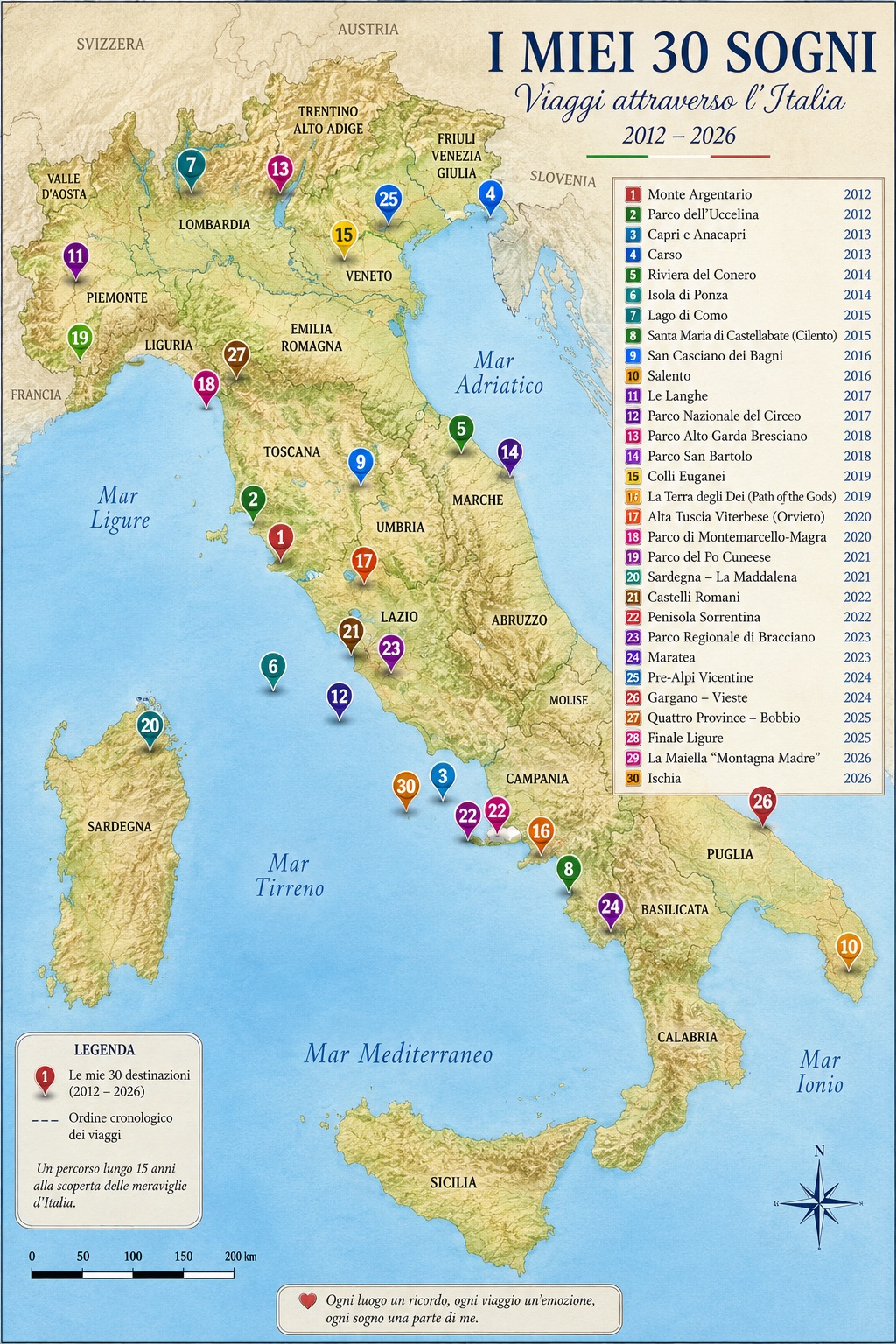
The first 30 Sogni di Patrizia ….
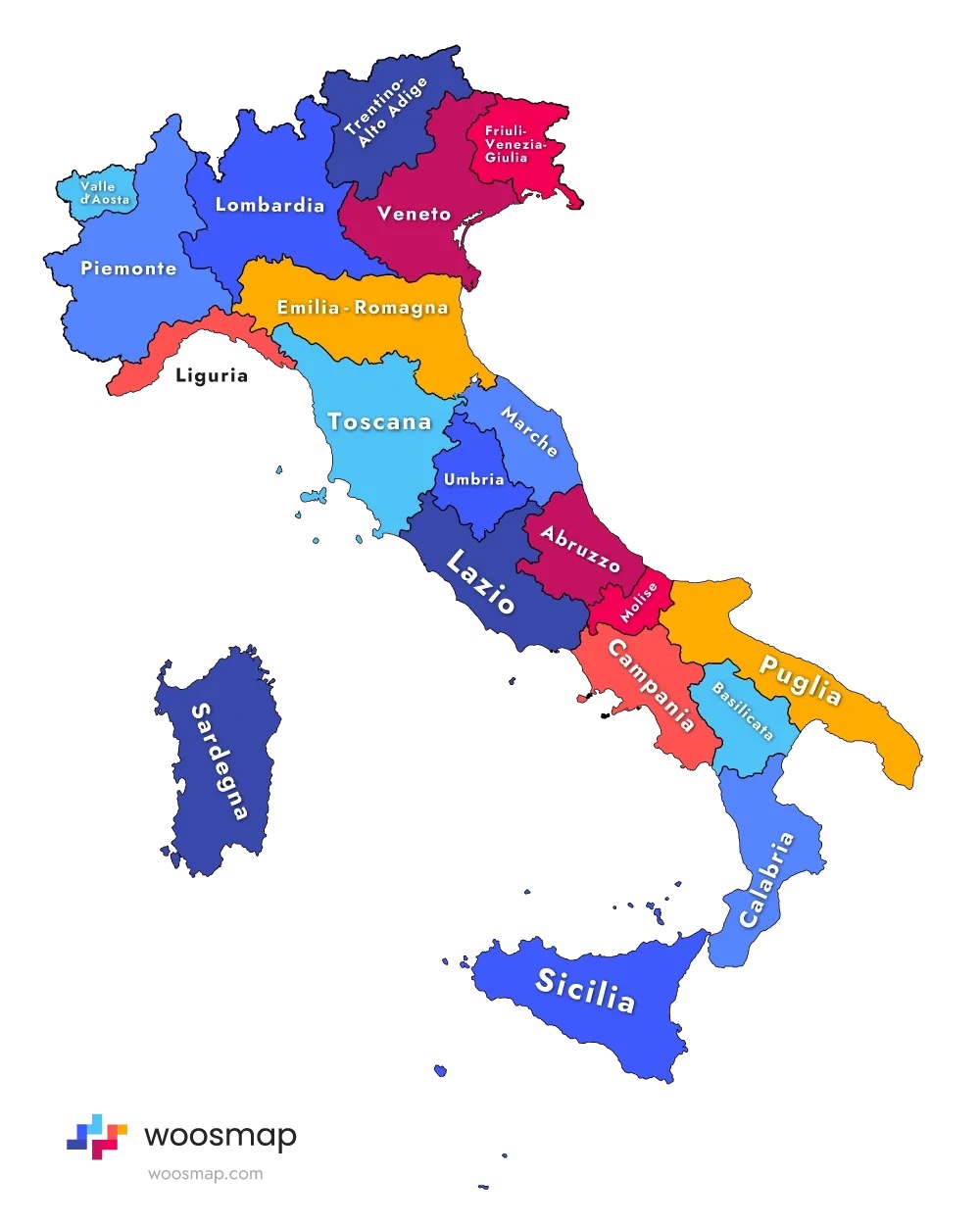
Italy is divided into 20 administrative regions. Five of these (Aosta Valley, Friuli-Venezia Giulia, Sardinia, Sicily, and Trentino-Alto Adige) are autonomous regions with special constitutional status.
Here is the complete list of all 20 regions, broken down by geographical macro-region:
Northern Italy
- Aosta Valley – The smallest region, nestled in the Alps.
- Piedmont – Famous for its wine, truffles, and the Alps.
- Lombardy – The most populous region, containing Italy’s financial capital, Milan.
- Liguria – The “Italian Riviera,” known for the coast and the Cinque Terre.
- Veneto – Home to Venice, Verona, and the Dolomites.
- Trentino-Alto Adige – An autonomous alpine region featuring the breathtaking peaks of the Dolomites.
- Friuli-Venezia Giulia – An autonomous, culturally rich region bordering Austria and Slovenia.
- Emilia-Romagna – Famed globally as the culinary heart of Italy.
Central Italy
- Tuscany – Renowned for its Renaissance art history, Florence, and rolling vineyards.
- Umbria – Often called the “Green Heart of Italy” for its lush, hilly interior.
- Marche – A diverse, less-crowded coastal region with mountains and historic villages.
- Lazio – Home to Rome, Italy’s vibrant capital and historic center.
Southern Italy
- Abruzzo – Features vast national parks, historic castles, and beautiful coastlines.
- Molise – A small, pristine, and incredibly peaceful region along the Adriatic.
- Campania – Home to Naples, the Amalfi Coast, and the ruins of Pompeii. Cilento is a Sub-region.
- Apulia (Puglia) – The “heel” of the boot, famous for its unique trulli houses and beaches.
Insular Italy (The Islands)
- Basilicata – Located in the arch of the boot, world-famous for the ancient cave dwellings (Sassi) in Matera.
- Calabria – The “toe” of the Italian peninsula, offering rugged mountains and pristine beaches.
- Sicily – The largest Mediterranean island, rich in ancient Greek and Roman history.
- Sardinia – An autonomous island famous for its crystal-clear water and archaeological ruins.
 Alessandro Colao