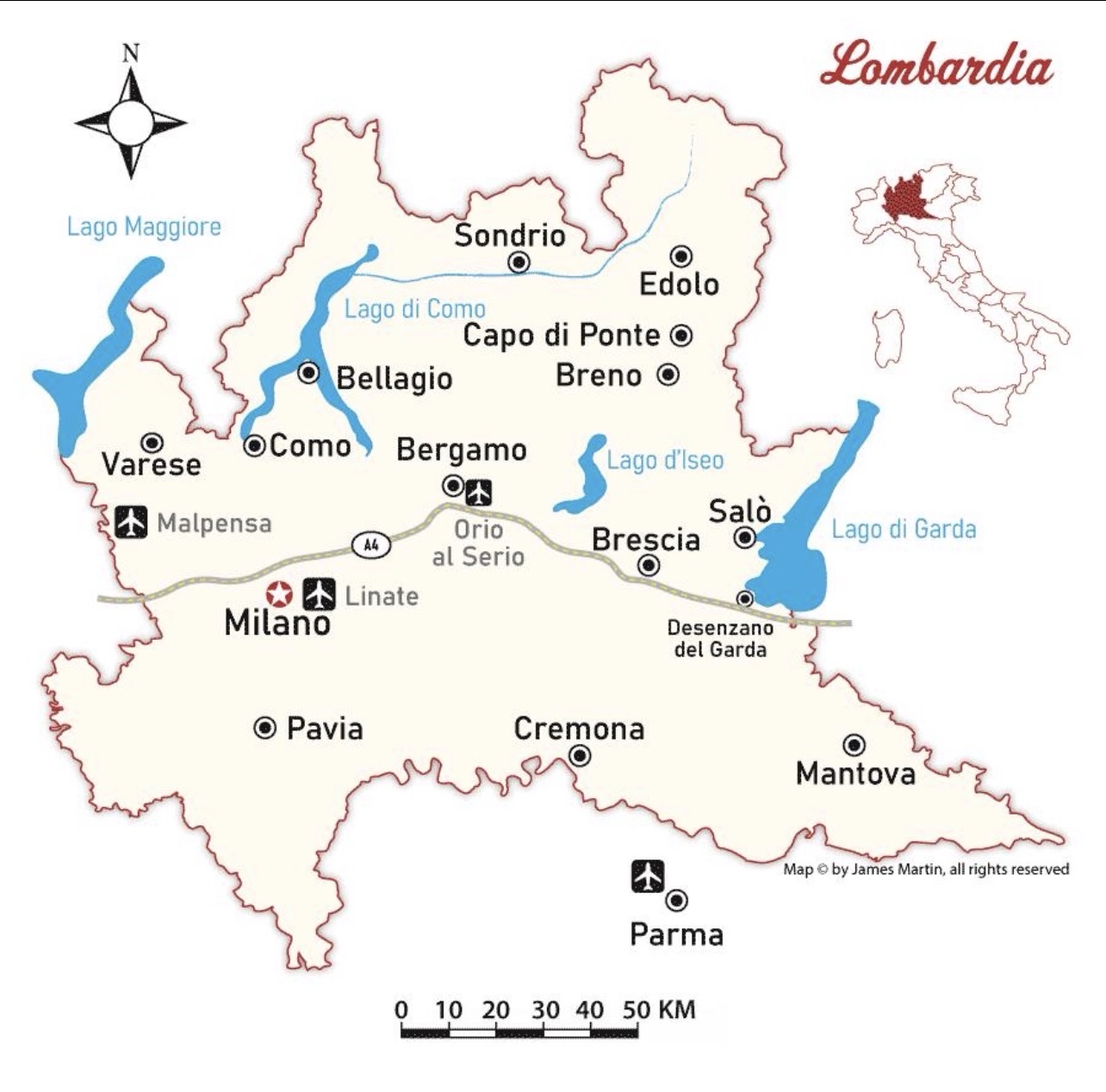
Lombardy (Italian: Lombardia) is a region in northern Italy known for its economic power, cultural heritage, and scenic diversity. It is Italy’s most populous and wealthiest region, encompassing the financial hub of Milan and a wide range of industrial, agricultural, and alpine landscapes.
Lombardy
Key facts
• Capital: Milan
• Population: About 10 million (2024)
• Area: 23,861 km² (9,206 sq mi)
• Official language: Italian
• GDP (2023): Approx. €450 billion—Italy’s largest regional economy
Geography and landscape
Lombardy stretches from the Alps in the north to the Po River in the south, encompassing major lakes such as Garda, Como, and Maggiore. Its terrain varies from mountain valleys and ski resorts to fertile plains central to Italian agriculture. The region’s strategic location makes it a key European crossroads for trade and transport.
Economy and industry
As Italy’s economic engine, Lombardy contributes roughly one-fifth of the nation’s GDP. Its capital, Milan, hosts major banks, fashion houses, and the Borsa Italiana. Manufacturing, design, pharmaceuticals, and agribusiness are vital sectors, supported by a dense network of small and medium-sized enterprises.
Culture and heritage
Lombardy has a rich artistic and architectural legacy, home to masterpieces such as Leonardo da Vinci’s The Last Supper and monuments like the Milan Cathedral and Certosa di Pavia. Its cities—Bergamo, Brescia, Mantua, and Cremona—reflect Renaissance and Baroque influences and are recognized by multiple UNESCO World Heritage sites.
Governance and society
Lombardy is an autonomous region with legislative powers under the Italian Constitution. It is governed by a regional council and president based in Milan. The region consistently ranks high in living standards, infrastructure, and healthcare, making it one of the most developed areas in southern Europe.
 Alessandro Colao