The traditional dance of Ischia performed with wooden sticks is called La ‘Ndrezzata. The name comes from the local dialect word for “intrecciata”, which translates to “intertwined” or “woven”, referencing the intricate way the dancers move and strike their weapons together. It is an incredibly fast-paced, rhythmic, and intense ancient warrior dance native to the small village of Buonopane, located in the municipality of Barano d’Ischia.
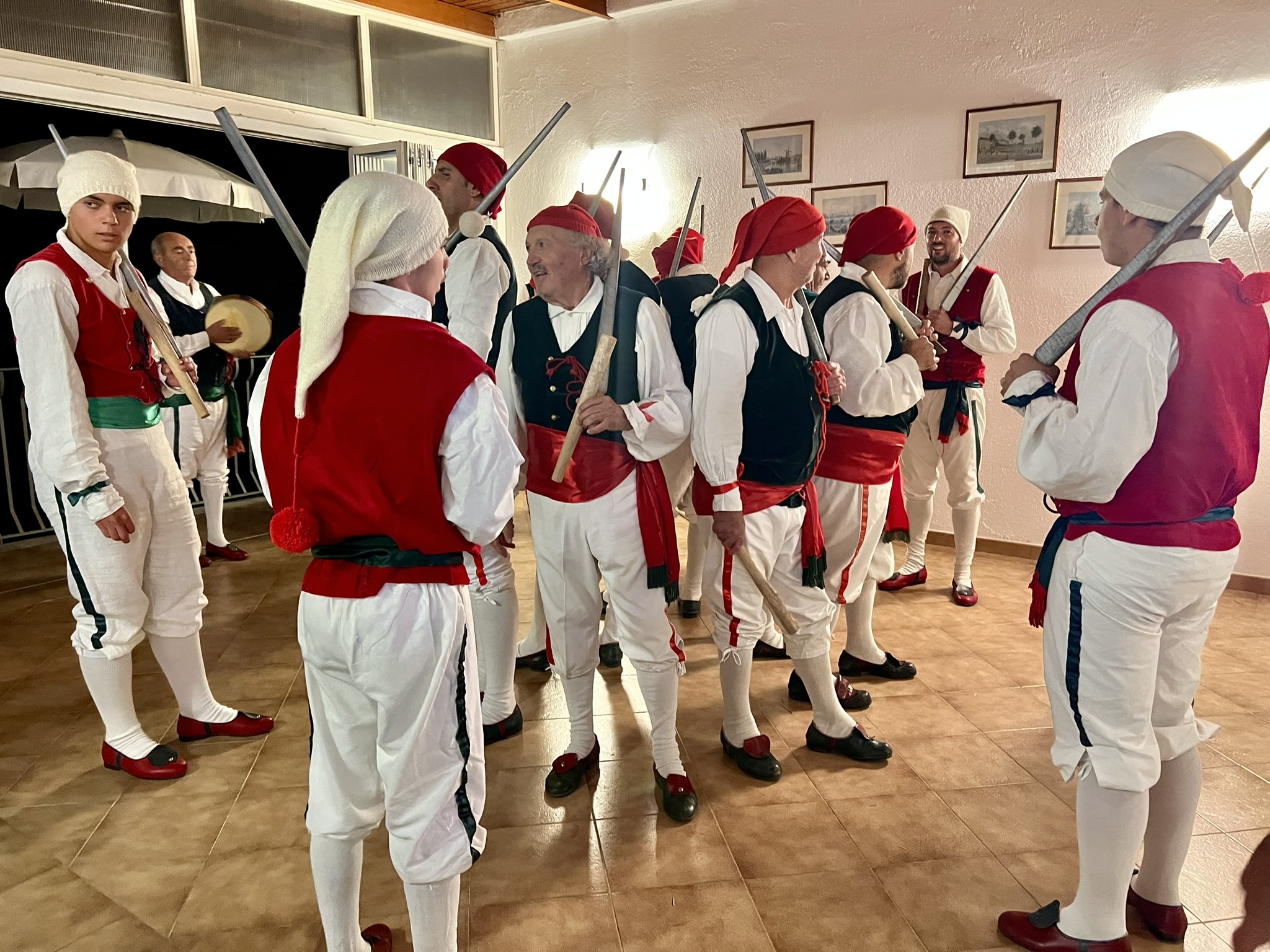
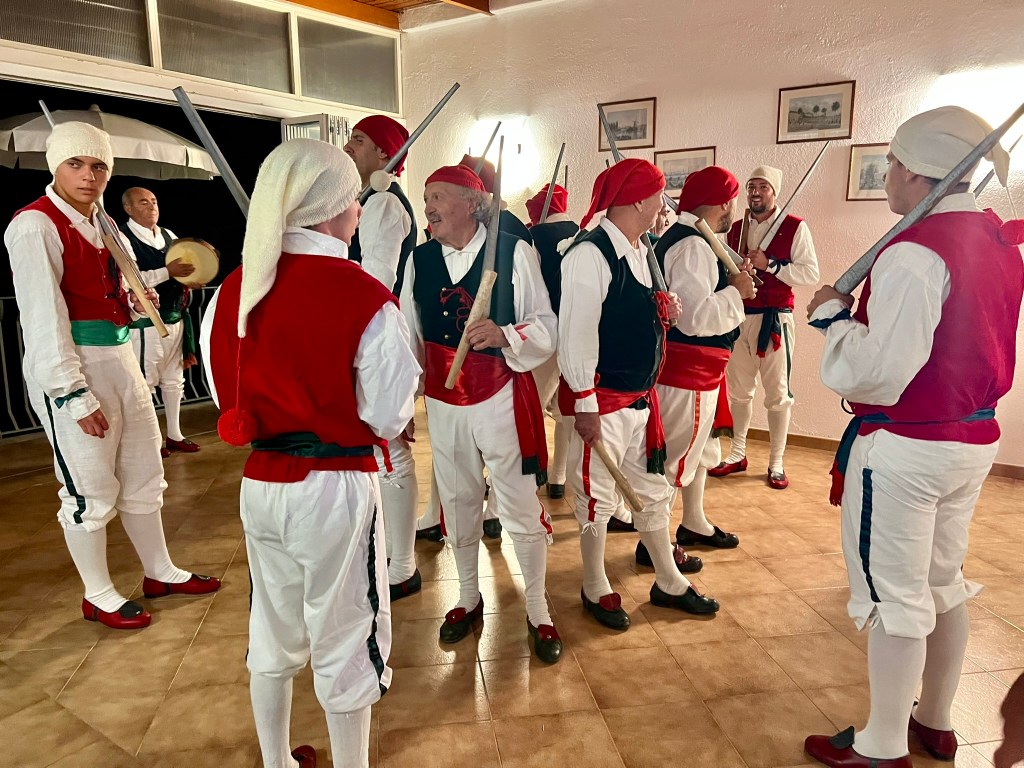
The Weapons: The performance is executed by a group of dancers (traditionally called ’ntrezzaturi) who carry a short wooden sword (spada) in one hand and a wooden baton or stick (mazzariello) in the other.
The Performance: Accompanied by musicians playing tammorre (traditional tambourines), flutes, and clarinets, the dancers leap and swap positions rapidly. They strike their wooden sticks and swords against those of their partners in a tightly choreographed, thunderous sequence of timed strikes.
The Costumes: Dancers perform in vibrant, festive red and white outfits inspired by historic local dress and the colors of the Italian flag, complete with laced sandals and small caps.
The exact roots of the dance are steeped in folklore, with a few competing theories:
- Greek War Practice: Some historians believe it has ancient Greek origins, serving as a rhythmic parody or simulation of dueling techniques taught to young soldiers.
- Saracen Battles: Another legend says it symbolizes the islanders’ historical clashes against invading Saracen pirates along the Mediterranean coast.
- The Lover’s Quarrel: Local lore tells of a 16th-century manuscript detailing a fierce rivalry between a man from the village of Barano and a man from Buonopane who both fell in love with the same woman, sparking a clash that the dance now commemorates as a symbol of peace.
If you want to witness this powerful spectacle live, it is performed publicly twice a year by the official Gruppo Folk Ndrezzata:
- Easter Monday (Lunedì in Albis): Performed on the churchyard steps of San Giovanni Battista in the village of Buonopane.
- June 24th: Performed during the local feast day celebrating the village’s patron saint, St. John the Baptist.



Leave a Reply