
Ulysses (the Roman name for Odysseus in Greek) was one of the most famous heroes of ancient Greek mythology. He is best known as the king of Ithaca, a small island in the Ionian Sea, and as the hero of Homer’s epic poem the Odyssey.
He was famous not only for his courage but especially for his intelligence, strategy, and ability to solve problems.
His story in brief
1. The Trojan War
Ulysses was a Greek king who joined the Greek armies in the war against Troy. According to legend, he was the person who created the idea of the Trojan Horse, the wooden horse used by the Greeks to enter the city of Troy and end the war.
2. The long journey home
After Troy fell, Ulysses tried to return to his wife Penelope and his son Telemachus in Ithaca. His journey took 10 years and became the story of the Odyssey.
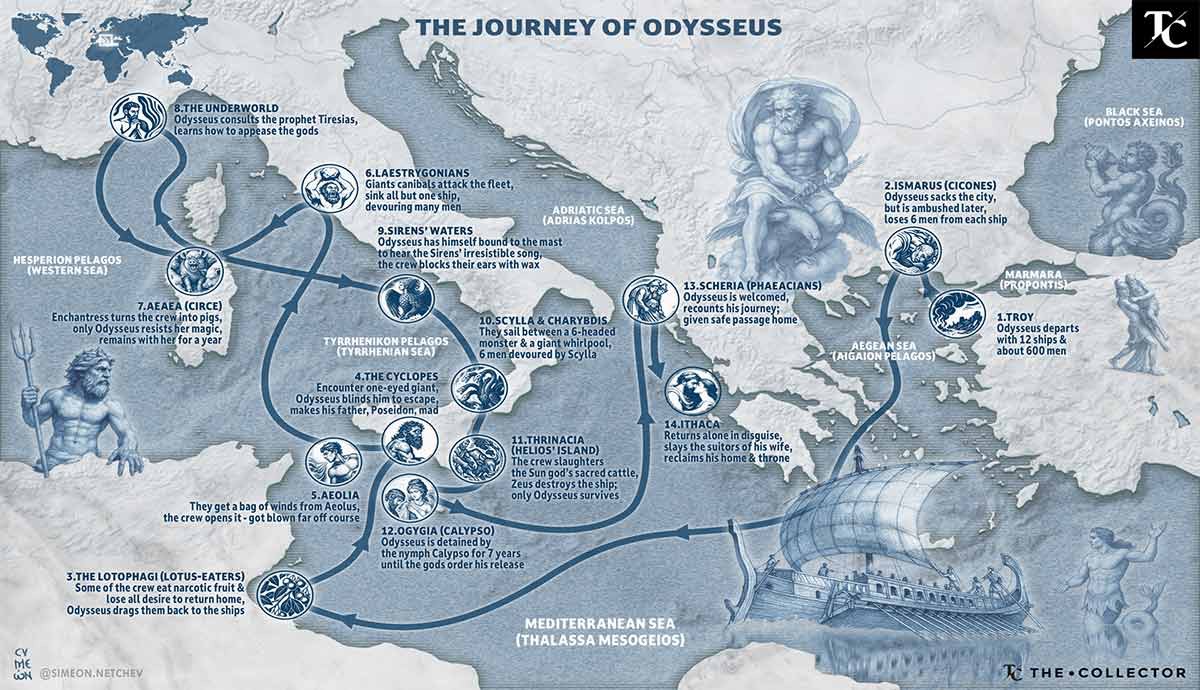
Along the way he encountered:
- The Cyclops Polyphemus — the one-eyed giant he escaped by using his cleverness.
- Aeolus — keeper of the winds.
- Circe — the enchantress who turned his men into animals.
- The Sirens — whose irresistible songs he resisted by having his sailors tie him to the mast of his ship.
- Scylla and Charybdis — deadly dangers in the Strait of Messina.
- Calypso — a nymph who kept him on her island for years.
3. Return to Ithaca
When he finally returned home, he found many men trying to marry Penelope and take his kingdom. With the help of his son, he defeated them and reclaimed his home.
Why Ulysses still matters
Ulysses represents the human journey: curiosity, endurance, courage, and the desire to return home. His voyage also reflects the ancient Greek connection with the Mediterranean Sea — especially the coasts of southern Italy, Sicily, and Greece.
The Iliad is an ancient Greek epic poem traditionally attributed to Homer. Composed around the 8th century BCE, it is one of the foundational works of Western literature.
Rather than telling the entire story of the Trojan War, The Iliad focuses on just a few weeks during the war’s final year. Its central theme is the wrath of Achilles, the greatest Greek warrior, and the devastating consequences of his anger.
Plot overview (spoiler-light)
- Achilles withdraws from battle after being insulted by the Greek commander, Agamemnon.
- Without Achilles, the Trojans, led by Prince Hector, gain the upper hand.
- Achilles’ close companion Patroclus enters the battle in Achilles’ armor and is killed by Hector.
- Consumed by grief and rage, Achilles returns to battle, kills Hector in single combat, and desecrates his body.
- The poem ends not with the fall of Troy, but with King Priam bravely visiting Achilles to beg for Hector’s body, leading to a moving moment of compassion.
Major themes
- Honor and glory (kleos): The pursuit of everlasting fame through heroic deeds.
- Wrath and reconciliation: Anger’s destructive power and the possibility of mercy.
- Mortality: Even the greatest heroes cannot escape death.
- Fate and free will: Characters make choices, but destiny ultimately shapes their lives.
- The human cost of war: Beyond heroic combat, the poem explores grief, loss, and suffering.
Main characters
- Achilles: The greatest Greek warrior, whose anger drives the plot.
- Hector: Troy’s noblest defender and family man.
- Agamemnon: Leader of the Greek forces.
- Patroclus: Achilles’ beloved companion and friend.
- Priam: King of Troy and Hector’s father.
- Helen: Whose abduction sparked the Trojan War.
- The gods: Zeus, Athena, Apollo, Hera, and others frequently intervene in human affairs.
Why it remains important
The Iliad has influenced literature, philosophy, art, and military thought for nearly three millennia. Its exploration of heroism, pride, grief, and compassion continues to resonate with modern readers, making it one of the greatest epic poems ever written.
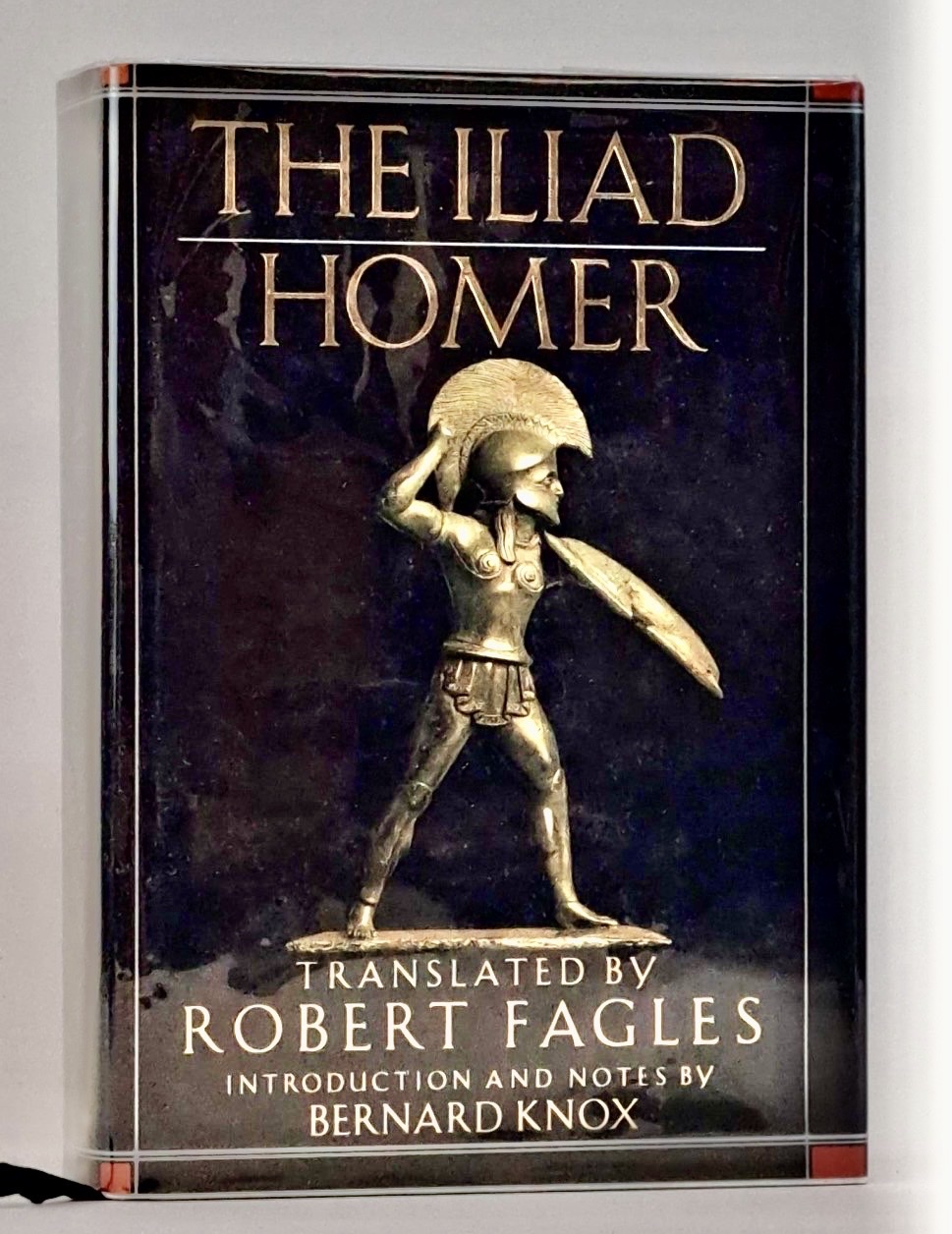
Odyssey is the epic poem by Homer that tells the extraordinary journey of Ulysses (Odysseus) after the Trojan War.
While the Iliad is about war and Achilles, the Odyssey is about adventure, survival, identity, and the desire to return home.
The story in brief
After Troy falls, Ulysses begins his voyage back to his island kingdom of Ithaca. The journey should take only a short time, but the gods and monsters of the ancient world delay him for 10 years.
Some of his famous adventures include:
- The Cicones – his first raid after leaving Troy, where his men suffer losses.
- The Lotus-Eaters – a people whose magical plant makes his men forget their desire to go home.
- The Cyclops Polyphemus – Ulysses blinds the giant Cyclops by using his intelligence rather than strength.
- Aeolus, keeper of the winds – he receives a bag of winds that could help him sail home, but his crew accidentally releases them.
- Circe the enchantress – she turns his men into animals, then becomes his ally.
- The Underworld – Ulysses visits the dead and speaks with heroes of the past.
- The Sirens – he hears their deadly song by having his men tie him to the mast of his ship.
- Scylla and Charybdis – he must navigate between two deadly dangers.
- Calypso’s island – the nymph Calypso keeps him for years before the gods allow him to leave.
Finally, he reaches Ithaca, where he finds his wife Penelope surrounded by suitors who believe he is dead. Using his famous cleverness, he defeats them and restores his home.
A central theme of the Odyssey is that Ulysses wins not because he is the strongest man, but because he is the most adaptable and intelligent.




 Alessandro Colao
Leave a comment