
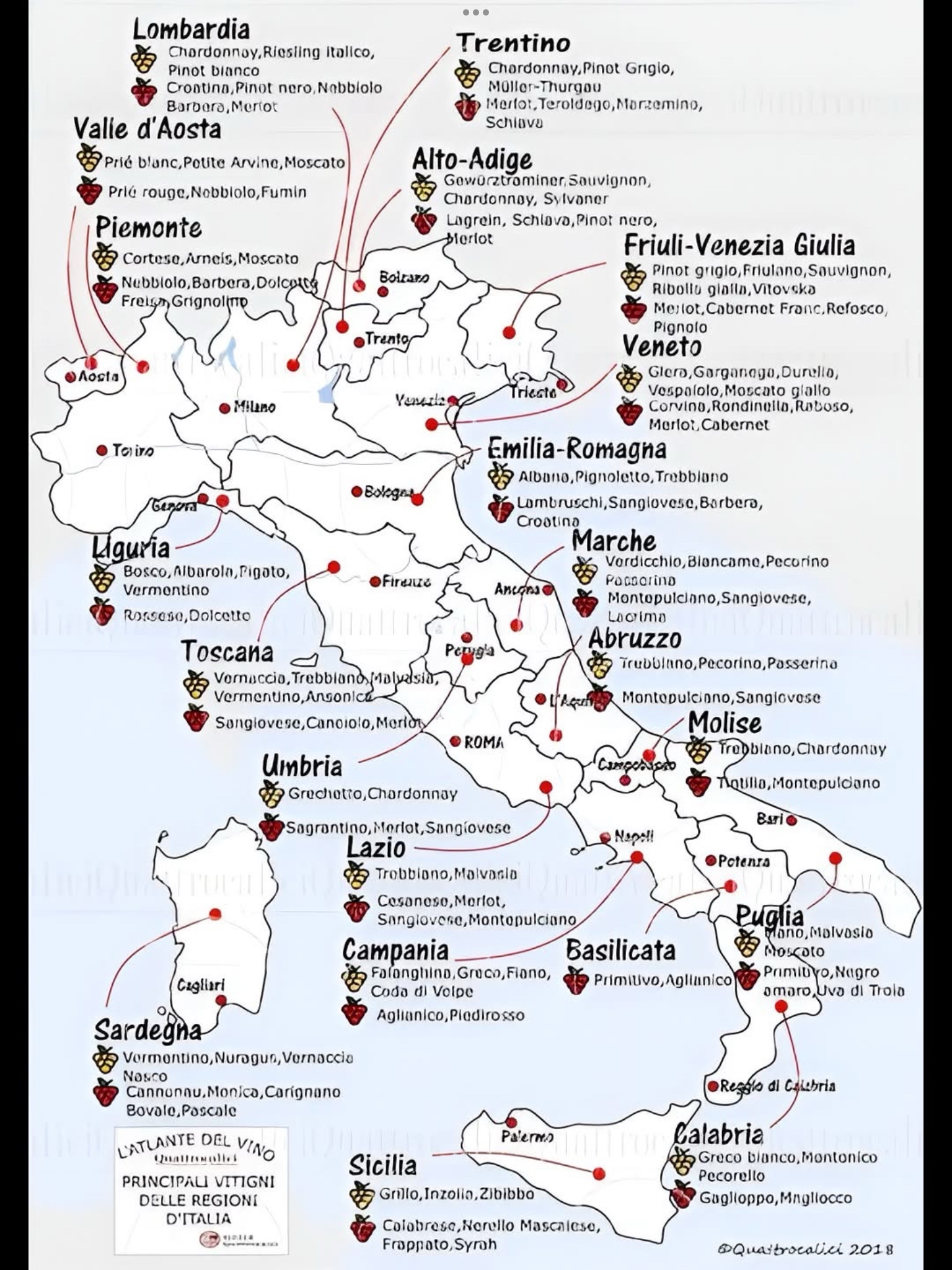
Italy is one of the oldest and largest wine producers in the world. It makes wine in every single one of its 20 regions, from the cold northern mountains to the warm southern islands.
Major Wine Regions
- Piedmont (Northwest): Known for powerful, long-aging red wines made from the Nebbiolo grape, including Barolo and Barbaresco. It also produces the bubbly and sweet white wine, Moscato d’Asti.
- Veneto (Northeast): Famous for crisp white Pinot Grigio, sparkling Prosecco, and rich, bold red wines like Amarone della Valpolicella.
- Tuscany (Central): Home to Chianti, made primarily from the Sangiovese grape, as well as high-end “Super Tuscans” that mix local and international grapes.
- Sicily (South): A warm island that now produces fresh, dry white wines (like Grillo and Etna Bianco) and structured volcanic reds from Mount Etna, alongside the fortified wine Marsala.
Key Italian Wine Classifications
- DOCG: The highest quality level. These wines must follow strict rules and pass a tasting panel.
- DOC: Controlled origin wines that guarantee a specific geographic area and traditional production methods.
- IGT: Wines that offer winemakers more freedom to use non-traditional grapes or methods while still maintaining good quality.
Italian wine is uniquely defined by its massive variety of local grapes and its philosophy that wine belongs on the dinner table. Unlike many countries that rely on famous grapes like Cabernet Sauvignon or Chardonnay, Italy has over 500 officially registered native grape varieties that have evolved alongside the local cuisine for thousands of years.
Piedmont: The Land of Structure and Perfume
- The Terroir: Tucked into the foothills of the Alps, this region experiences foggy mornings and sunny days, which is ideal for slow-ripening grapes.
- The Grapes: The king here is Nebbiolo, a thin-skinned grape that creates wines with a pale brick color but surprisingly high tannins and acidity. It is famous for a distinct aroma profile often described as “tar and roses.”
- The Wines: Barolo and Barbaresco are the heavyweights, requiring years of aging to soften. For daily drinking, locals turn to the lighter, fruitier Barbera or Dolcetto.
Tuscany: The Heart of Sangiovese
- The Terroir: Rolling clay and limestone hills under the warm Mediterranean sun create the perfect environment for slow, balanced ripening.
- The Grapes: Sangiovese is the backbone of Tuscan winemaking. It naturally tastes of sour cherries, savory herbs, and earthy terracotta.
- The Wines: Chianti Classico is the traditional standard. Further south, Brunello di Montalcino offers a much deeper, more muscular expression of 100% Sangiovese. The coastal area of Bolgheri is famous for Super Tuscans, where winemakers break traditional rules to blend native grapes with French varieties like Cabernet Sauvignon and Merlot.
Veneto: From Light Sparklers to Massive Reds
- The Terroir: Stretching from the Dolomite mountains down to the Adriatic Sea, this region has highly diverse microclimates.
- The Grapes: Garganega (for white wines) and Corvina (the main component of Valpolicella red blends).
- The Wines: Veneto is a powerhouse of styles. It produces Prosecco (made from the Glera grape via the tank method for fresh, fruity bubbles) and Amarone. To make Amarone, winemakers harvest red grapes and dry them on straw mats for months to shrivel and concentrate the sugars before fermentation, resulting in a dry, intensely rich wine with high alcohol.
Sicily: Volcanic Terroir and Coastal Freshness
- The Terroir: Intense southern sun paired with high-altitude vineyards on the dark, mineral-rich volcanic soils of Mount Etna.
- The Grapes: Nerello Mascalese (a red grape often compared to fine Pinot Noir) and Carricante (a bracingly crisp, mineral white grape).
- The Wines: Etna Rosso and Etna Bianco are highly sought after for their distinct smokiness, vibrant acidity, and elegant texture, moving the island away from its historical reputation for only producing heavy, bulk blending wines.



Leave a Reply